
Lavender Benefits: What Lavender Teaches Us About Calm and Sleep

Photo by Nathan Rist
Notes from a Lavender Farm in the High Desert of Colorado
There are many reasons people love lavender. Some come for the scent, others for sleep, and some are drawn to the soft purple color that rolls across our summer fields. But after several years of growing lavender in the high desert outside Mesa Verde in southwest Colorado, I’ve come to believe that lavender offers something deeper than fragrance or beauty.
Lavender quietly teaches us about calm.
Many people first search for lavender benefits because they want better sleep, less stress, or a natural way to relax at the end of the day. After years of tending lavender plants and watching how people use them in their homes, I’ve come to believe the benefits of lavender are both practical and deeply felt.
Not the kind of calm you buy in a bottle or find in a quick moment of relief, but the slower kind that comes from paying attention to plants and the rhythms they live by.
Lavender Doesn’t Rush
On our lavender farm, the plants move on their own timeline. Each spring lavender wakes slowly, and this is a seasonal truth I have to remind myself about every year as worry creeps in that maybe the plants gave up during the coldest winter months.
At first the plants look almost gray and dormant, as if nothing is happening at all. The tops of the plants are brittle and dry, and it seems impossible they’ll ever brim with energy again. But if you kneel down and look closely, tiny green shoots begin pushing through the lowest woody stems.
Growth happens gradually. By early summer the plants are quietly gathering strength, and then almost all at once the field greens and begins to bloom. Purple spikes rise above the silver foliage and the bees arrive, filling the air with a steady hum.
Lavender never hurries the process. It simply waits for the right conditions. Watching this cycle each year is a reminder that calm is not the absence of activity. The field is alive with pollinators, sunlight, and wind, but everything unfolds at the pace the plant can sustain.
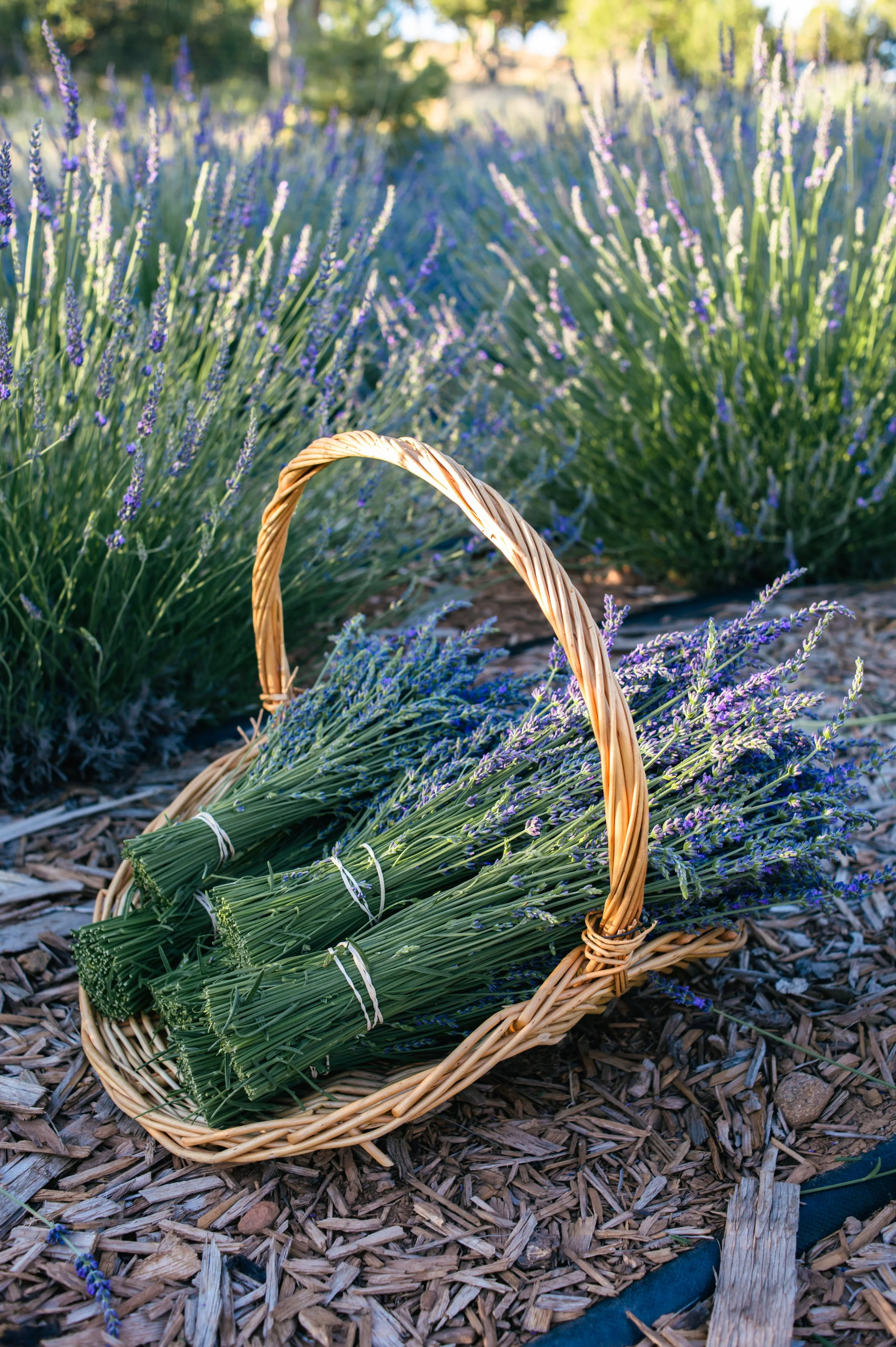
Photo by Nathan Rist
Why Lavender Thrives in Simple Conditions
Lavender is surprisingly humble in its needs. Unlike many crops, lavender prefers soil that is rocky, dry, and well-drained, often thriving in places where other plants struggle. Too much water or fertilizer can actually harm it. Giving lavender a nitrogen boost is one of the quickest ways to weaken the plant rather than help it.
These growing conditions are one reason lavender does so well in the Four Corners region of Colorado. With our dry air, strong sun, and mineral soils, the environment mirrors the Mediterranean landscapes where lavender originally evolved.
The plants sink their roots deep into the soil and adapt to the conditions rather than fighting them. There’s something instructive about that. Plants that endure here tend to be the ones that work with the land rather than demanding too much from it, and lavender reminds us that resilience often grows out of simplicity.
If you’re curious about the science behind how lavender interacts with the body, you might enjoy our article “The Science of Lavender: Why This Ancient Herb Still Works for Stress Today.”
Lavender Benefits for Stress, Sleep, and the Nervous System
For generations people have turned to lavender for rest and restoration. Modern research now helps explain what herbal traditions have long observed: lavender’s aroma interacts with the limbic system in the brain, the region involved in emotion, memory, and mood.
This interaction can help shift the nervous system toward the parasympathetic state, sometimes called the “rest and digest” response. In simple terms, one of the most well-known lavender benefits is its ability to help the body move away from stress and toward regulation.
Common Lavender Benefits
• Supports relaxation and emotional calm
• Helps promote deeper, more restful sleep
• Encourages nervous system balance
• Creates a peaceful atmosphere in the home
• Supports daily rituals that reduce stress
But long before science confirmed these effects, people simply noticed how lavender made them feel. The scent in a linen drawer, a small bundle beside the bed, or a warm bath with lavender flowers at the end of the day were simple rituals that quietly worked.
Why Lavender Helps With Sleep
One of the most widely known lavender benefits is its ability to support better sleep. The scent of lavender has been shown to interact with the brain’s limbic system, the area connected to emotion and relaxation, helping the body shift toward the parasympathetic “rest and digest” state. When the nervous system settles, it becomes easier to fall asleep and stay asleep through the night.
This is why lavender has traditionally been used in bedtime rituals — from lavender sachets placed beside the bed to a light mist of lavender hydrosol on a pillow. These small sensory cues gently signal to the body that it is time to unwind.
Everyday Ways to Experience Lavender Benefits
One of the most rewarding parts of growing lavender is watching how people incorporate it into everyday life. Small moments with lavender often have the biggest impact.
Simple Ways to Use Lavender at Home
• A spritz of lavender hydrosol on your pillow before sleep
• A glass of lavender lemonade on a warm afternoon
• A lavender sachet tucked into a suitcase or drawer
• A few drops of lavender oil in a diffuser at the end of the day
• A lavender roll-on applied to wrists during stressful moments
On the farm I experience something similar each morning when I walk the rows. The plants move gently in the wind and the air carries that familiar scent — clean, herbal, and grounding.
It’s a quiet reminder that many lavender benefits are found not in dramatic changes, but in the small rituals that shape everyday life.
Lessons From a Lavender Farm
Farming lavender has taught me many practical lessons about soil, climate, and patience. But perhaps the most meaningful lesson is this: calm isn’t something we force.
Like lavender, it grows best when the conditions are right — when we slow down, simplify, and allow a little space for stillness. The plants seem to understand this instinctively.
And if we’re paying attention, they’re generous enough to teach us.
Cheers to continuously learning from the plant kingdom around us.
-Katie
